Behavioural Design • Mobile App
Transforming Smoking Cessation Through Behavioral Change
Role
UX/UI Designer
Timeline
4 Weeks
Team
Myself - UX lead
2 UX Designer
Skills
UX/UI Design
User Research, Market
Prototyping
Overview
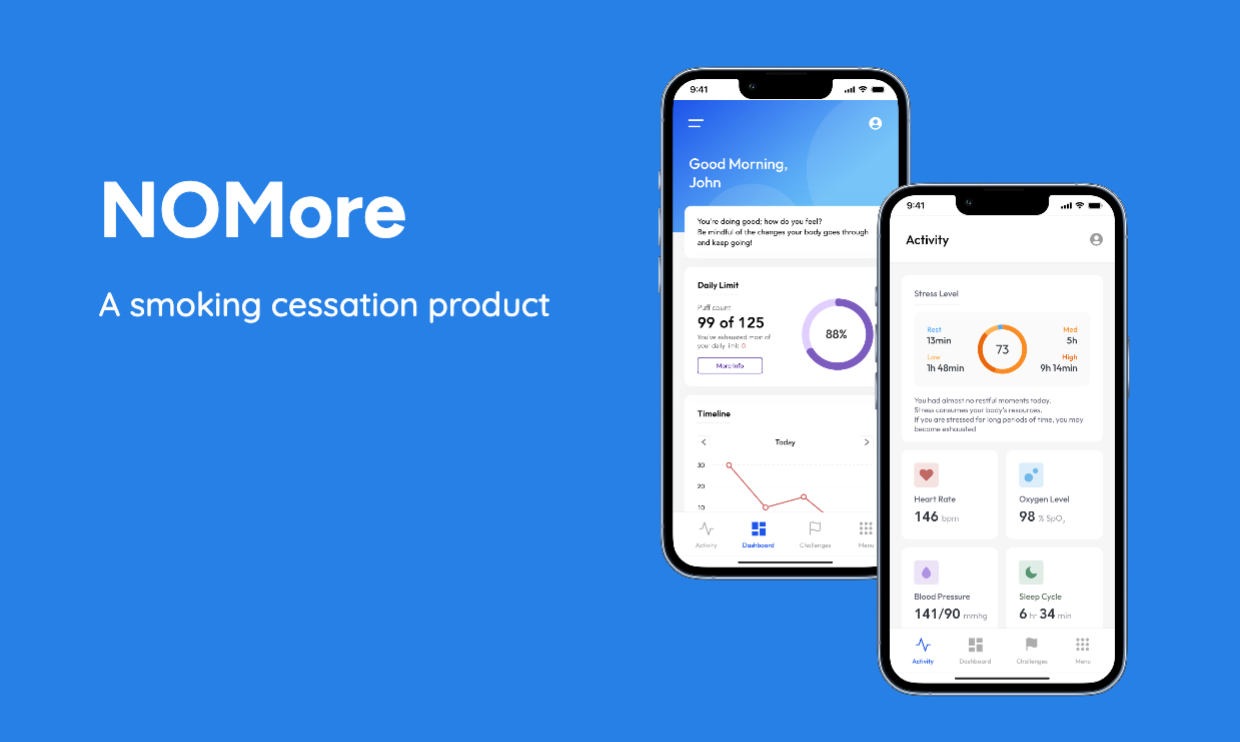
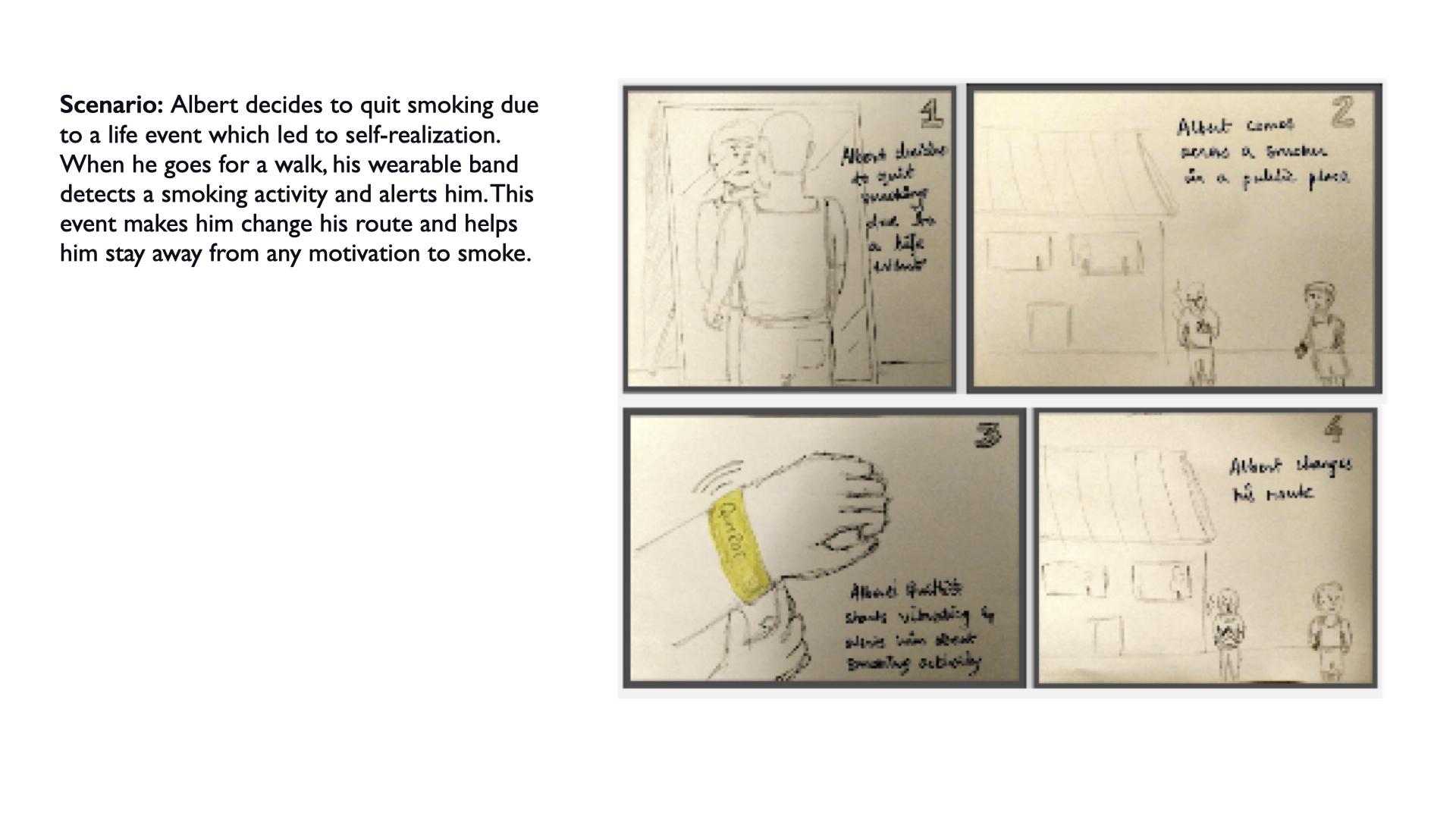
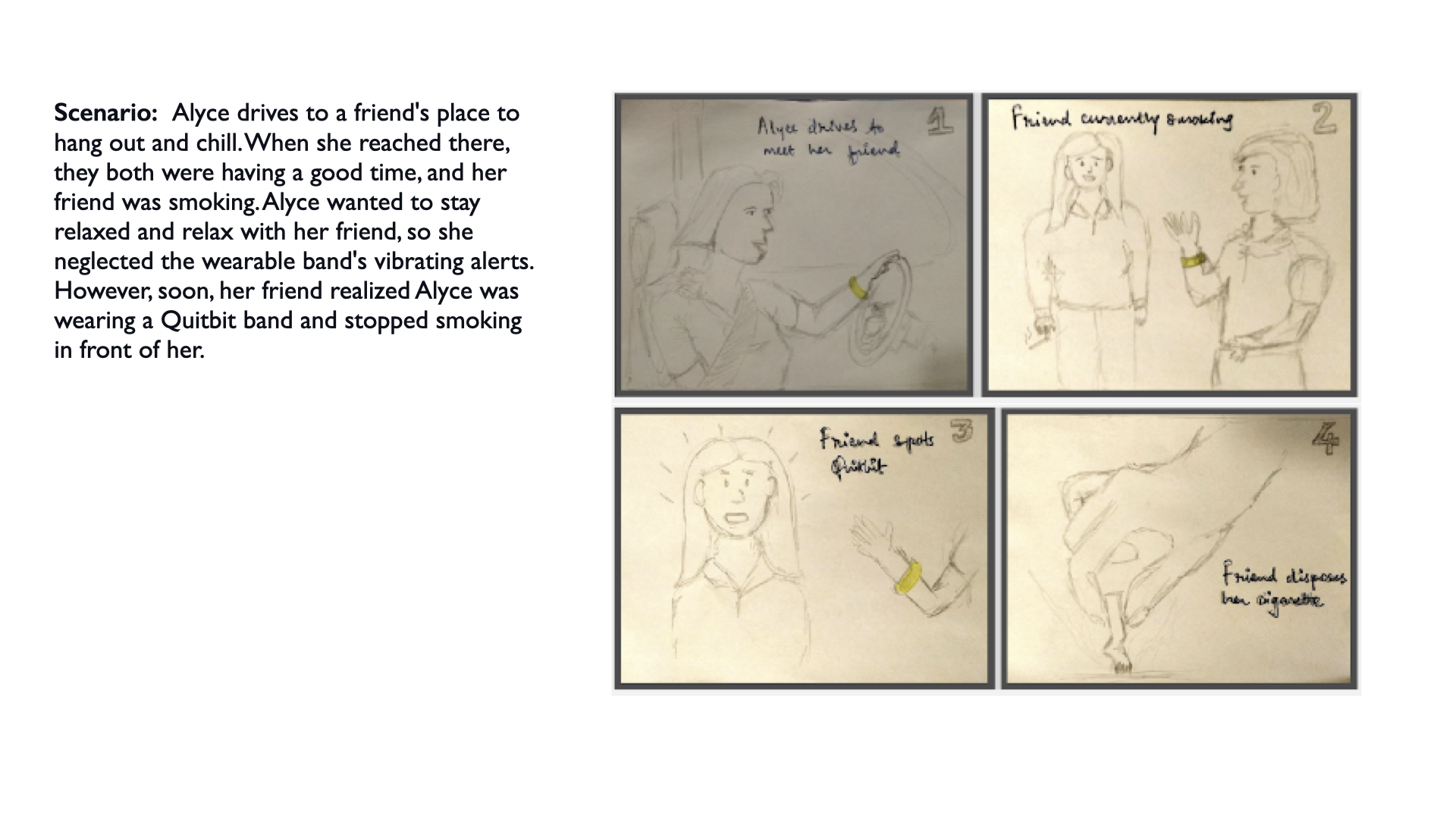
A wristband and app designed to interrupt smoking patterns and inspire progress through personalized insights and motivation
Out Comes
See What User Enjoyed
Meaningful Interruption
Real-time haptic feedback disrupts smoking habits by reducing inhalation duration.
Expressive Feedback
Visual and haptic cues on the band signal progress or warnings.
Healthy Motivation
Weekly challenges motivate users to stay engaged in their journey.
Personalized Progress
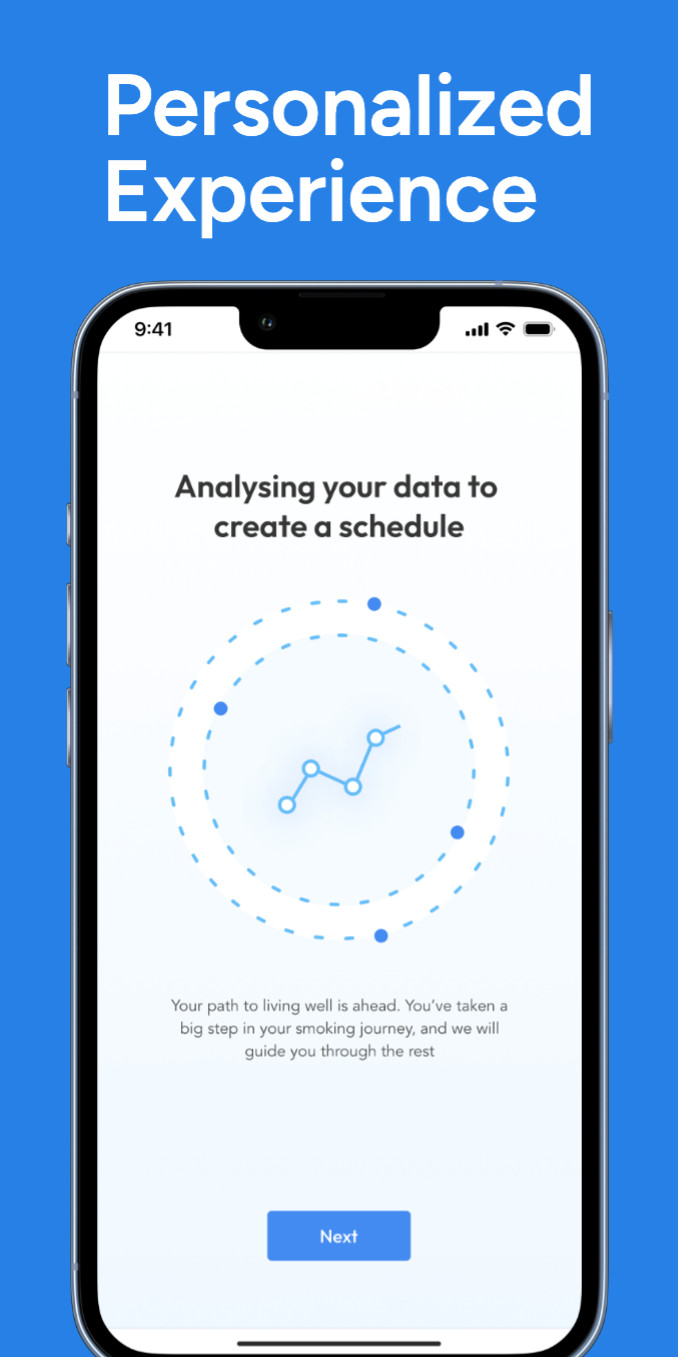
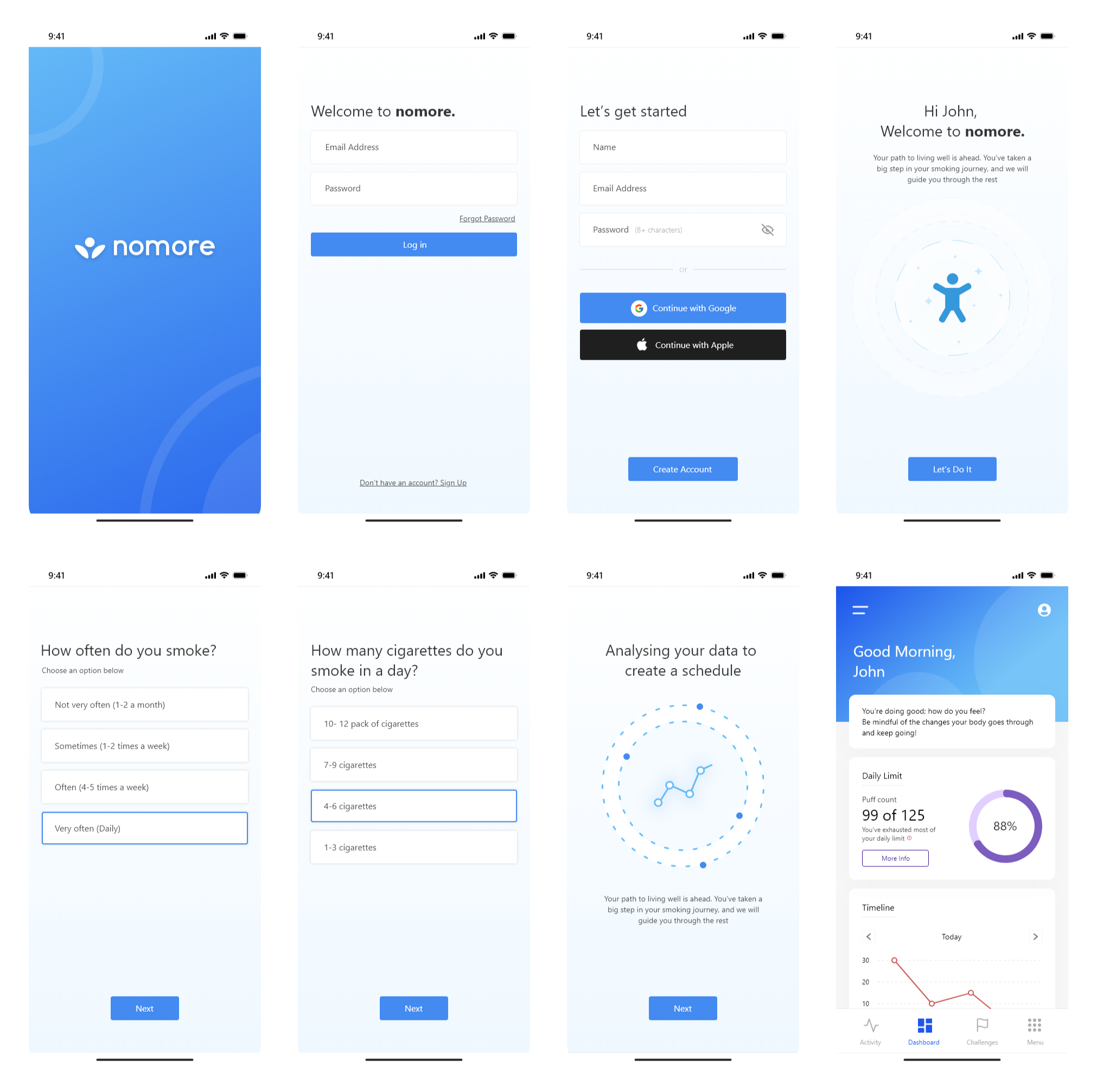
The app tracks and visualizes the user's progress across multiple metrics.
Impact
Increased user satisfaction by 79% during testing and enhanced purchase confidence for parents.
The Challenge
Empowering Smokers to Quit Through Behavioral Change
How might we create a solution that goes beyond reminders to actively support smokers in their cessation journey?
Why
This Challenge?
Design Process
Drop down the below tab to view the design artifacts.
Design Artifacts
Key design artifacts created during the design process to visualize and communicate the solution.
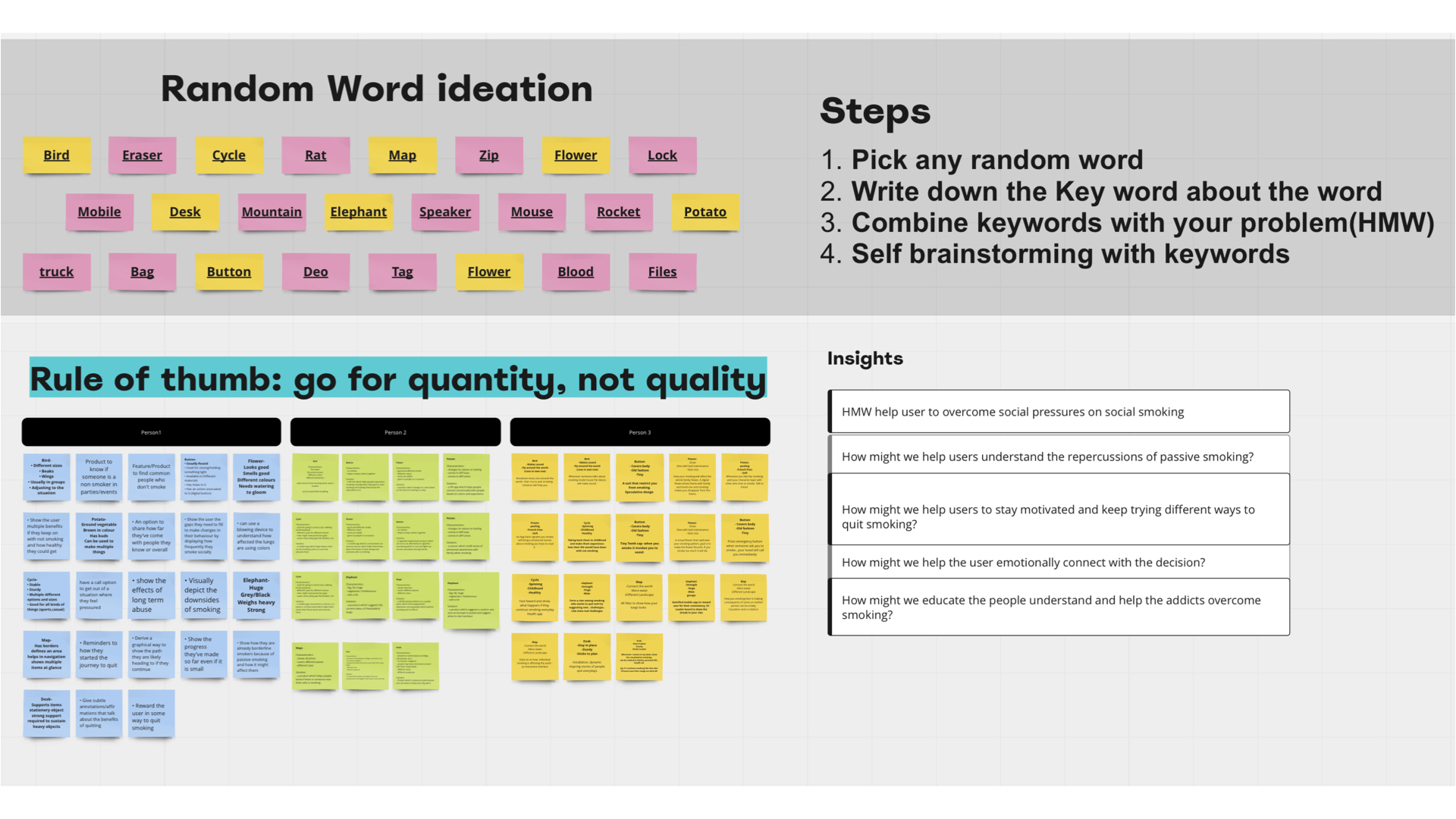
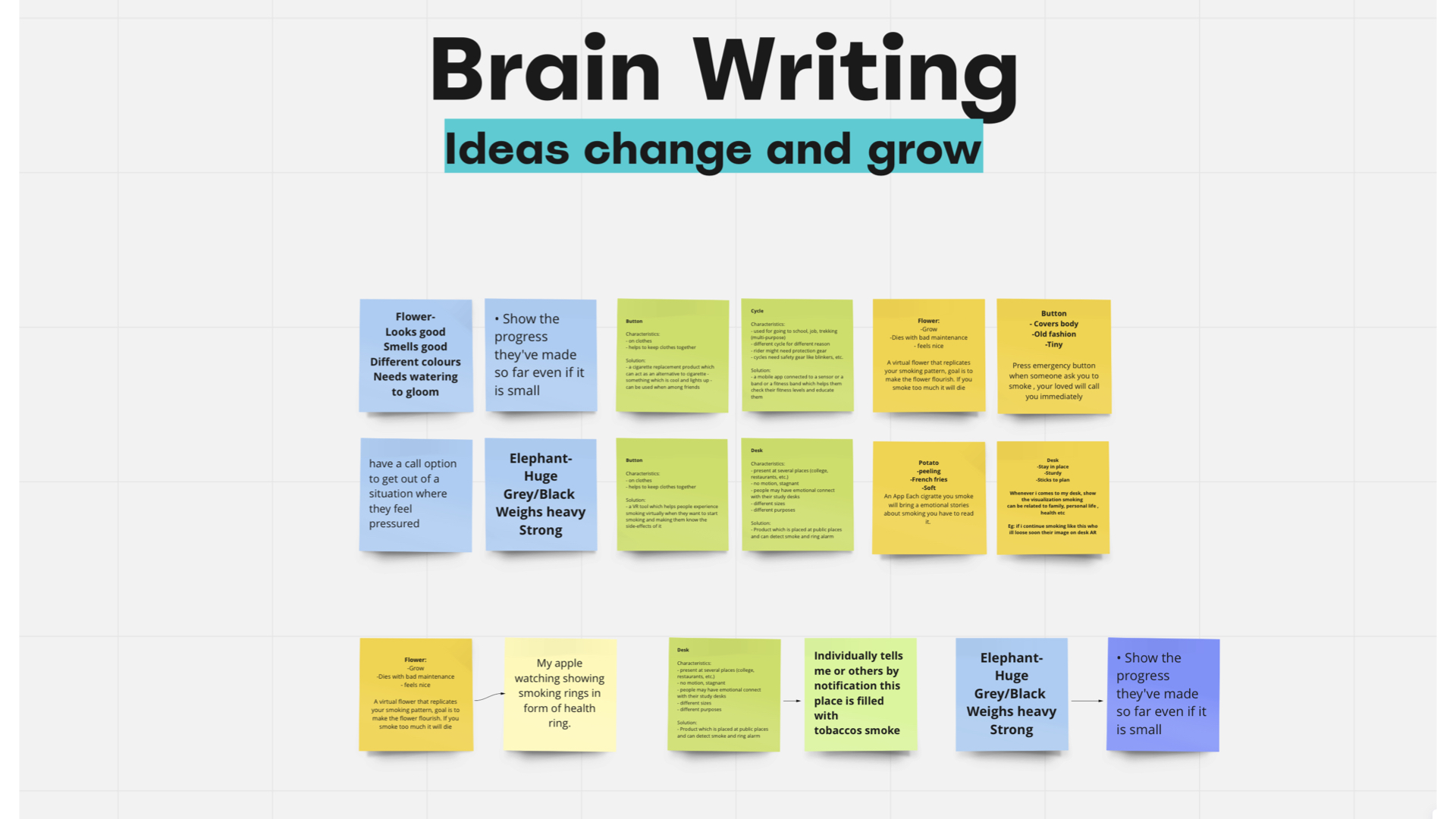
Why Initial Ideation Methods Didn't Work
56 raw ideas
But many were abstract and disconnected from real-world user needs.
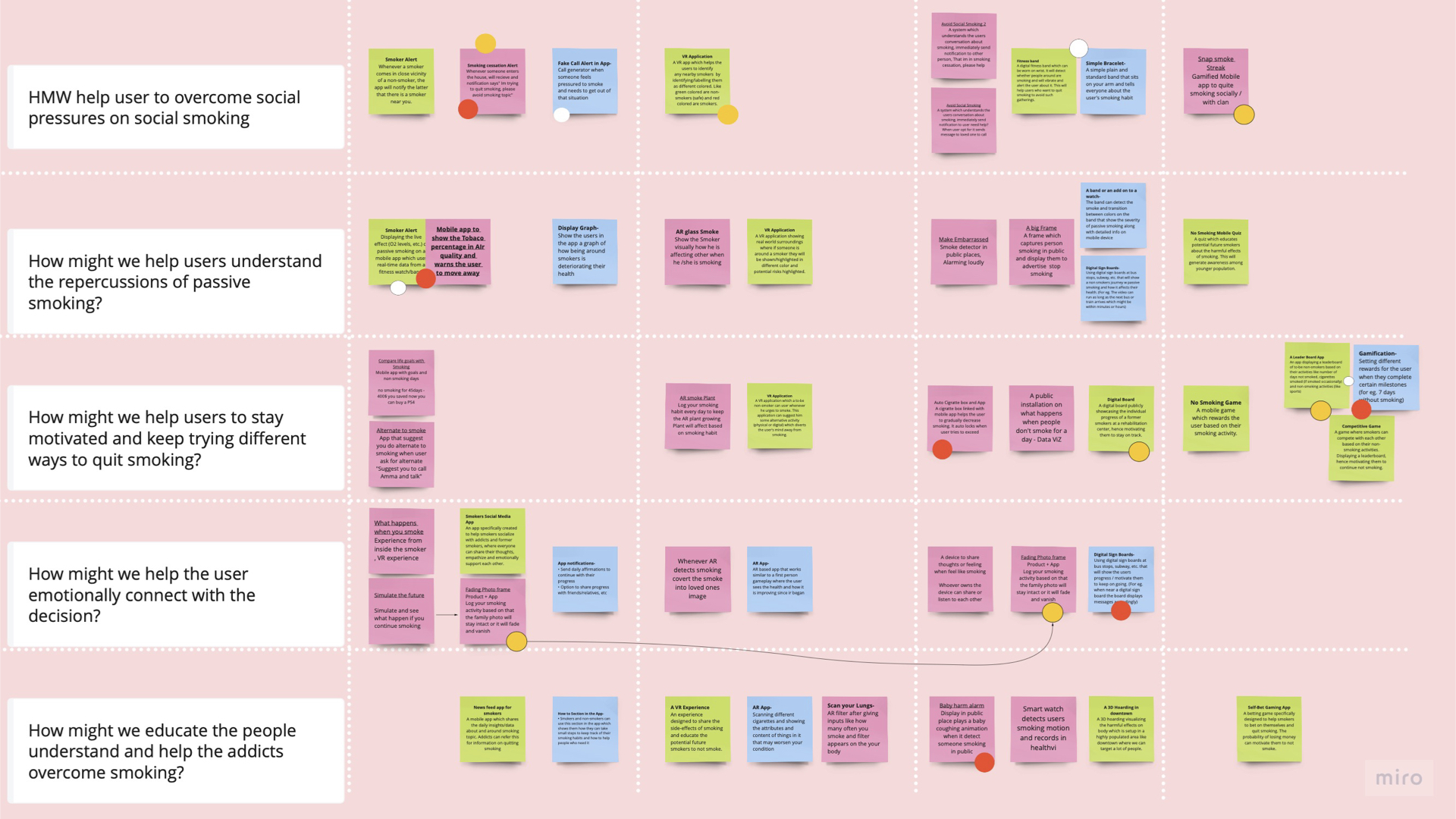
Why the Creative Matrix Worked
Affinity Mapping
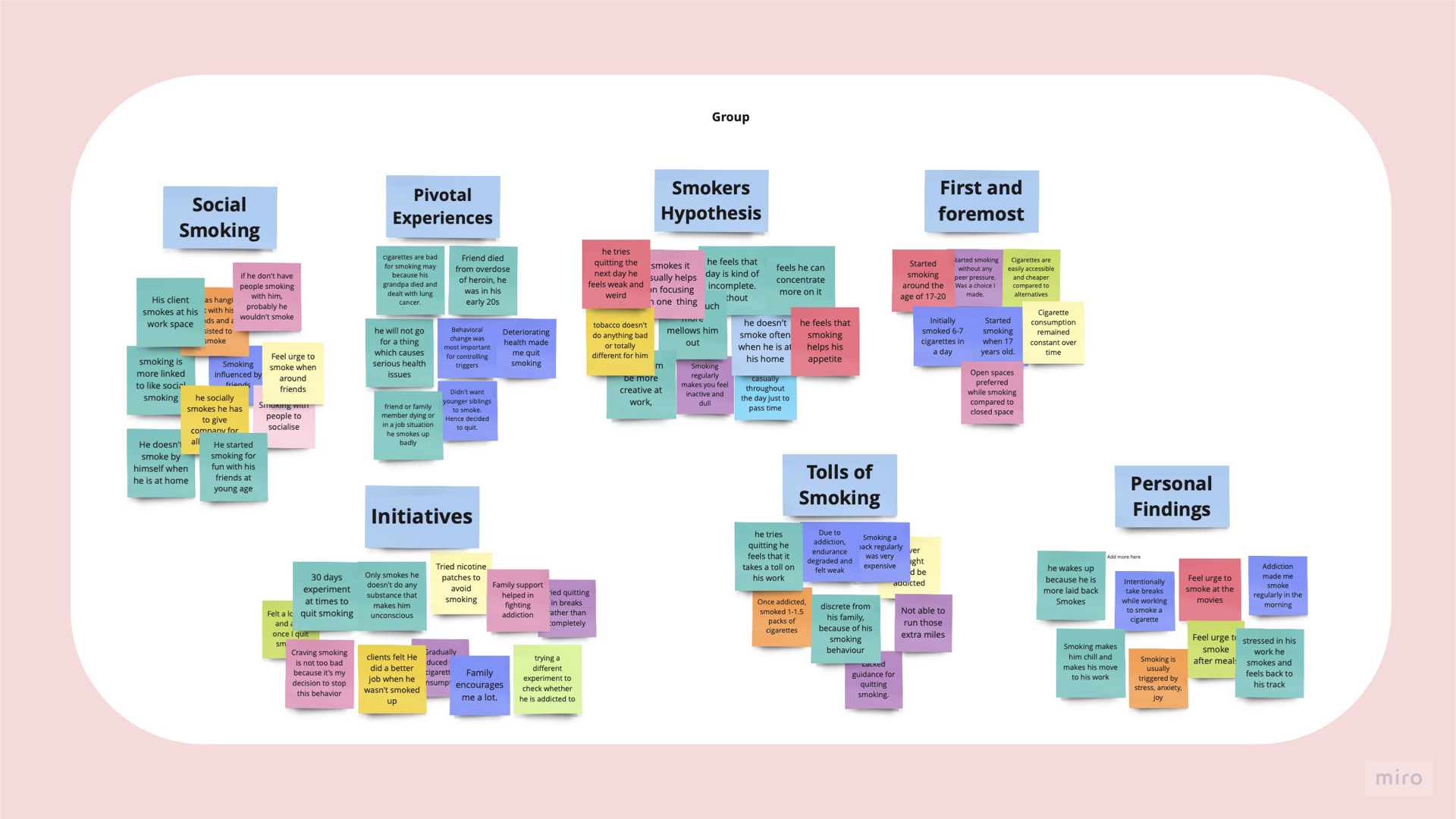
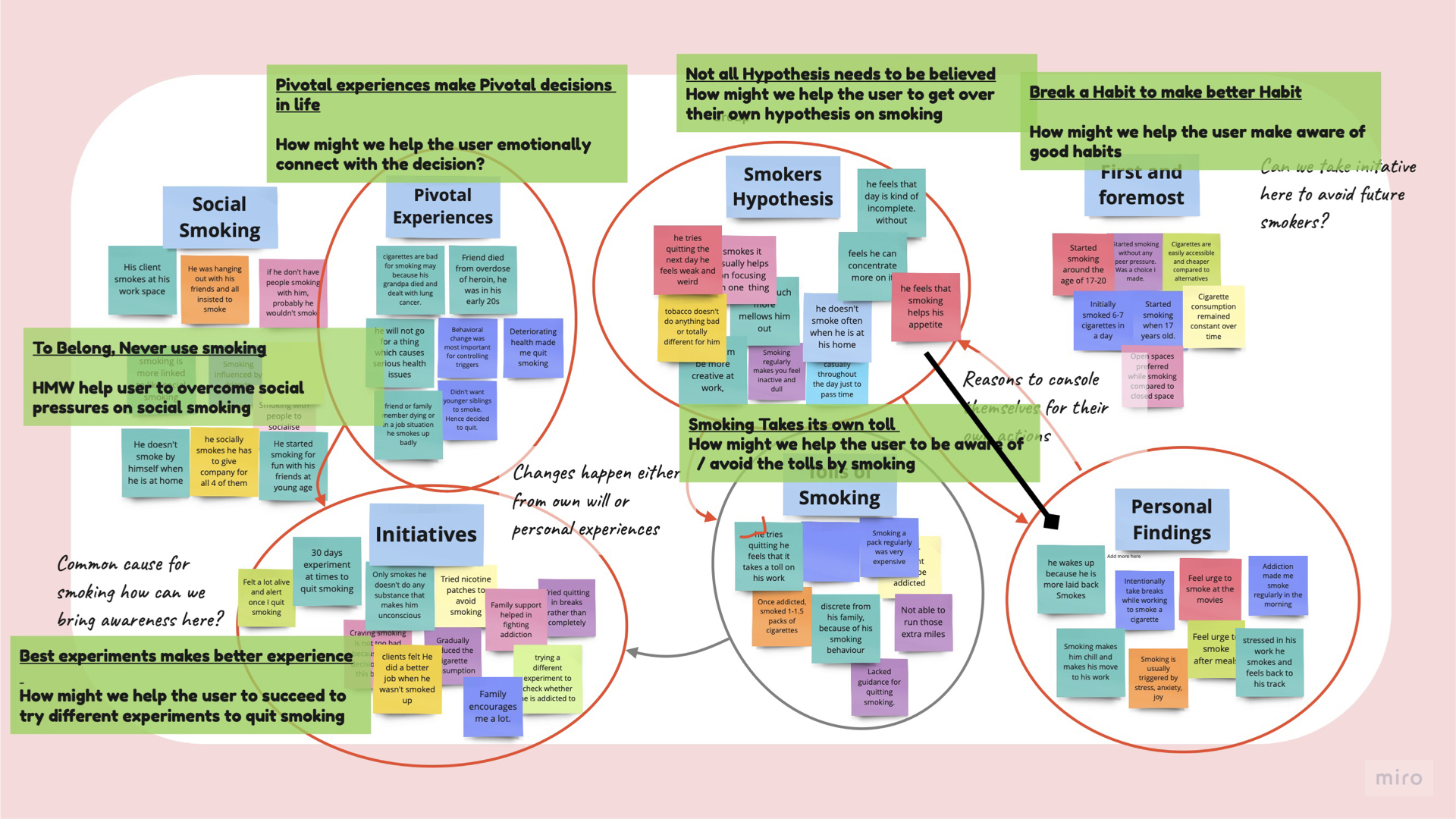
We applied several affinity mapping to synthesize our ideation data to lead to a down-selection process. From the top 60, we have voted the top three ideas that fall under these design principles, Convenient, Behavioural, and Motivational.
Card Sort
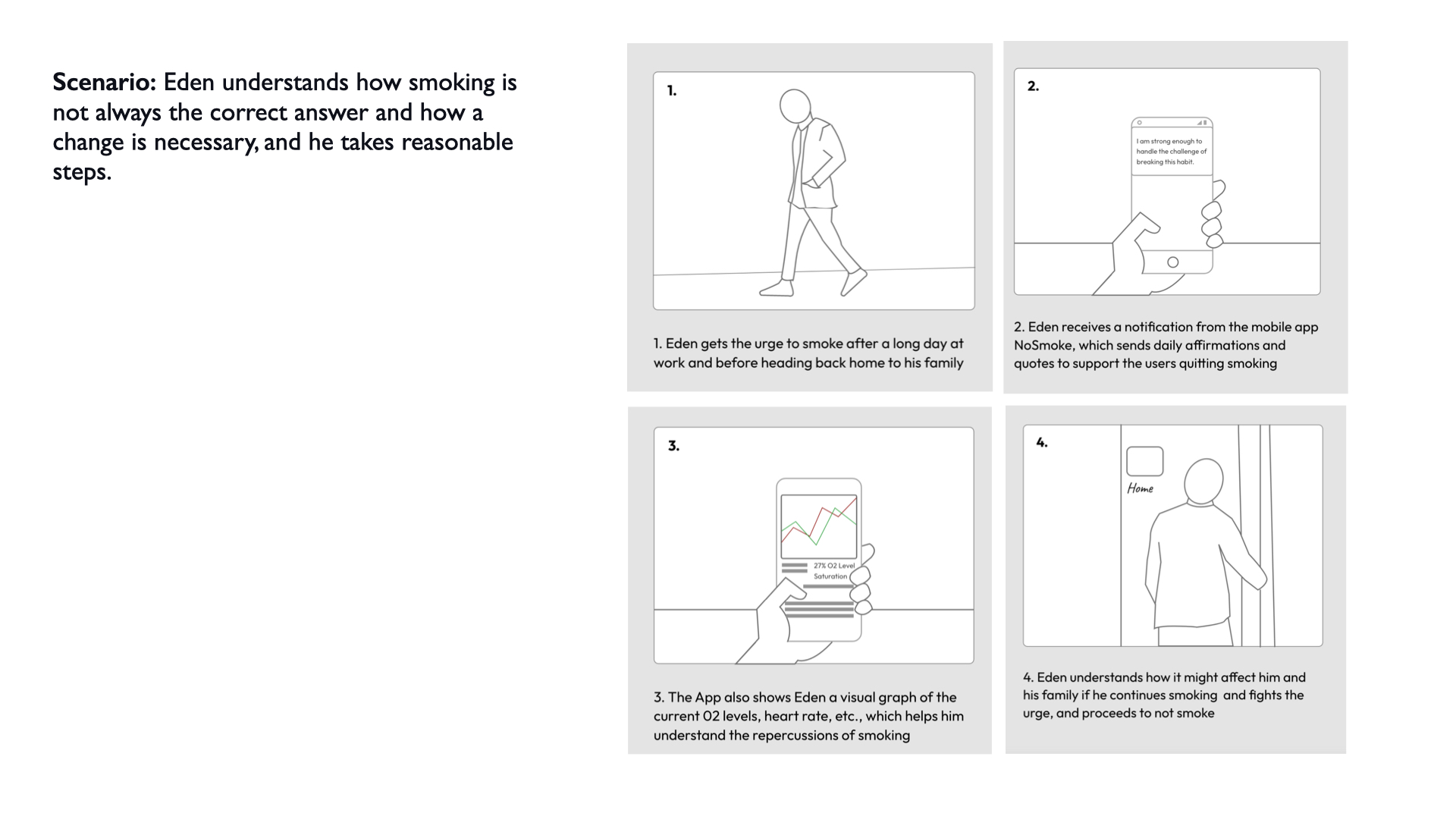
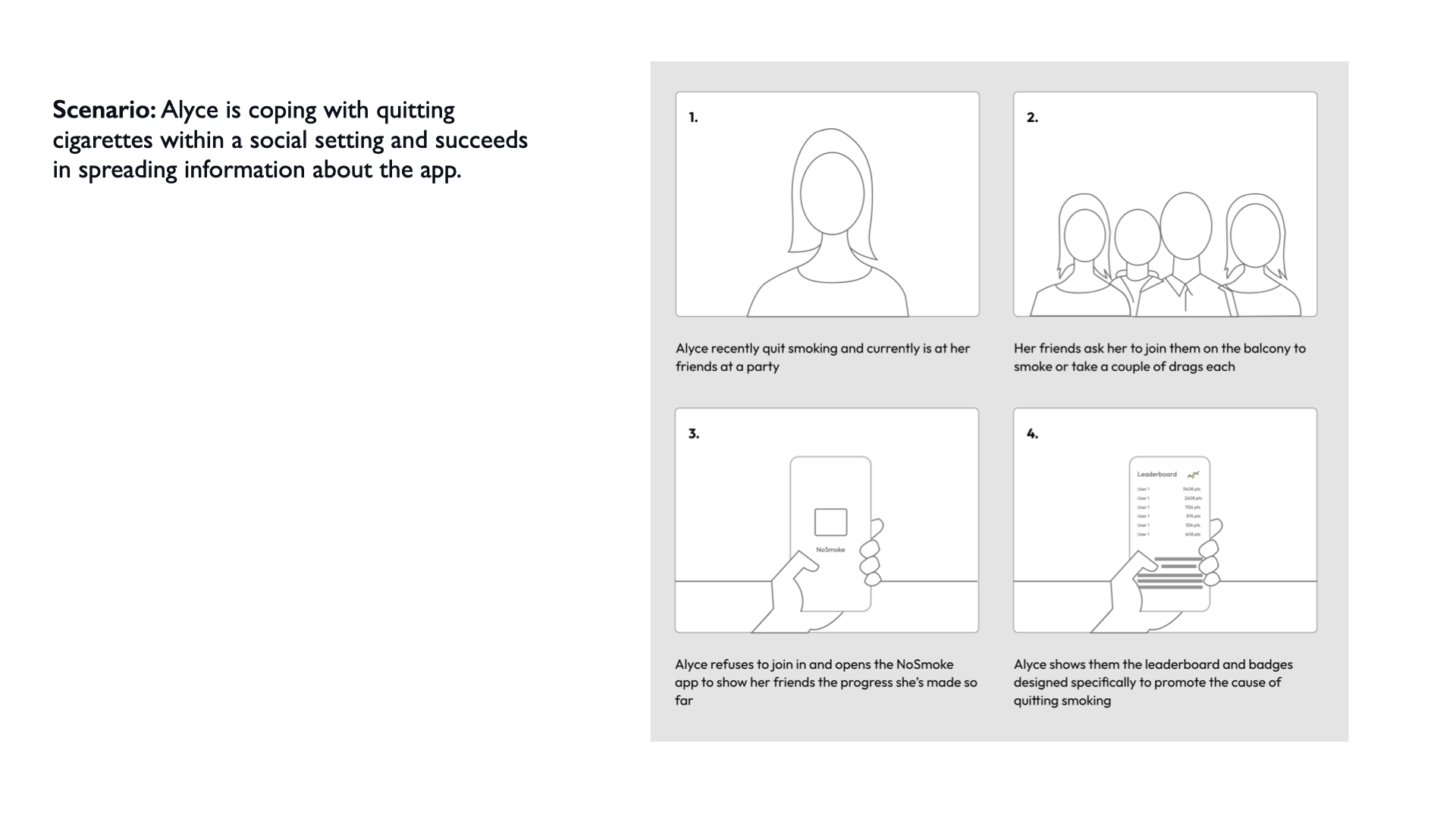
I used card sorting as a design method to refine the principle and user flow. By having users organize and categorize features related to smoking cessation, I validated our three core principles: Convenient, Behavioural, and Motivational, which informed the structure of our app's information architecture.
Key Insights
See What Our Happy Customers need
Final Screens
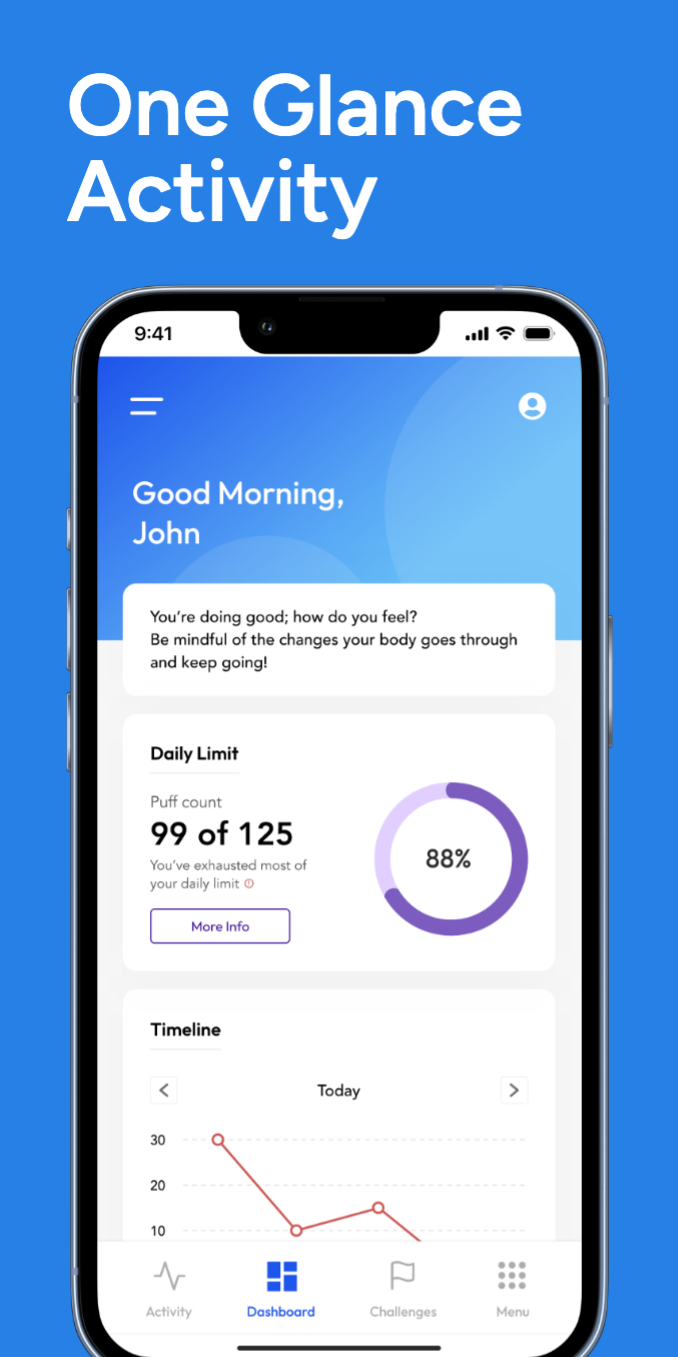
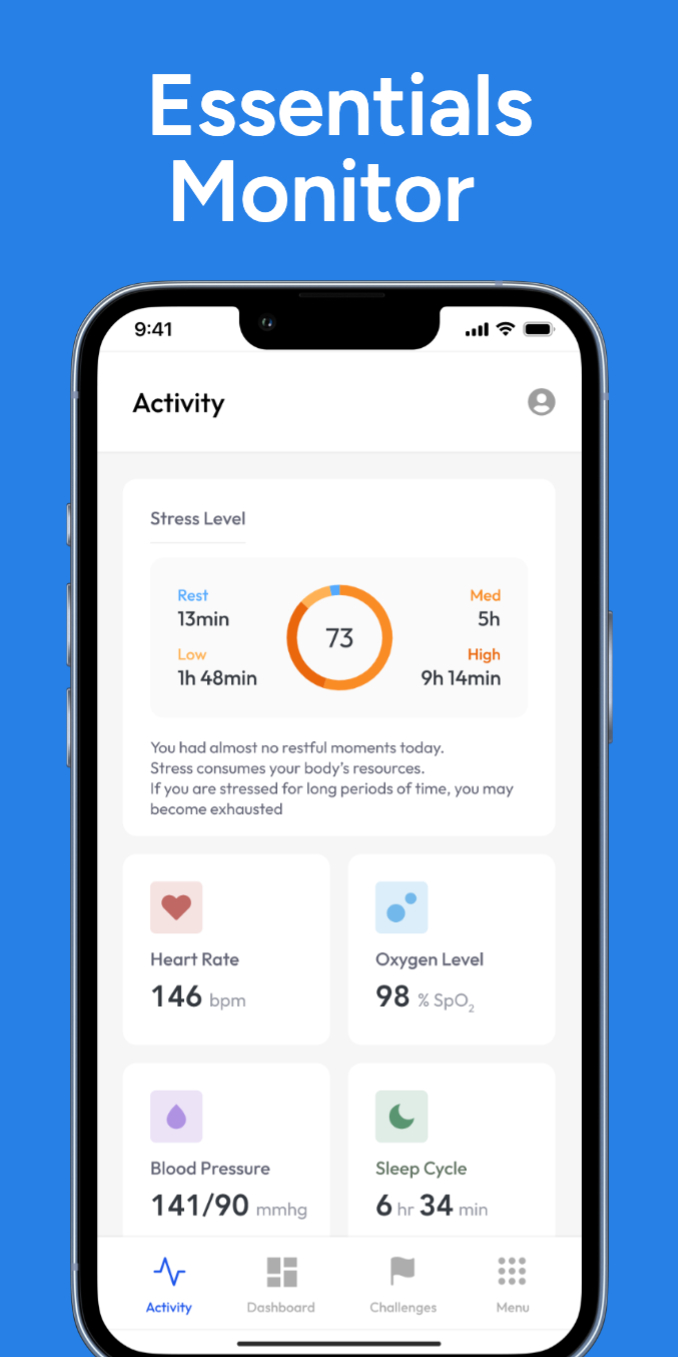
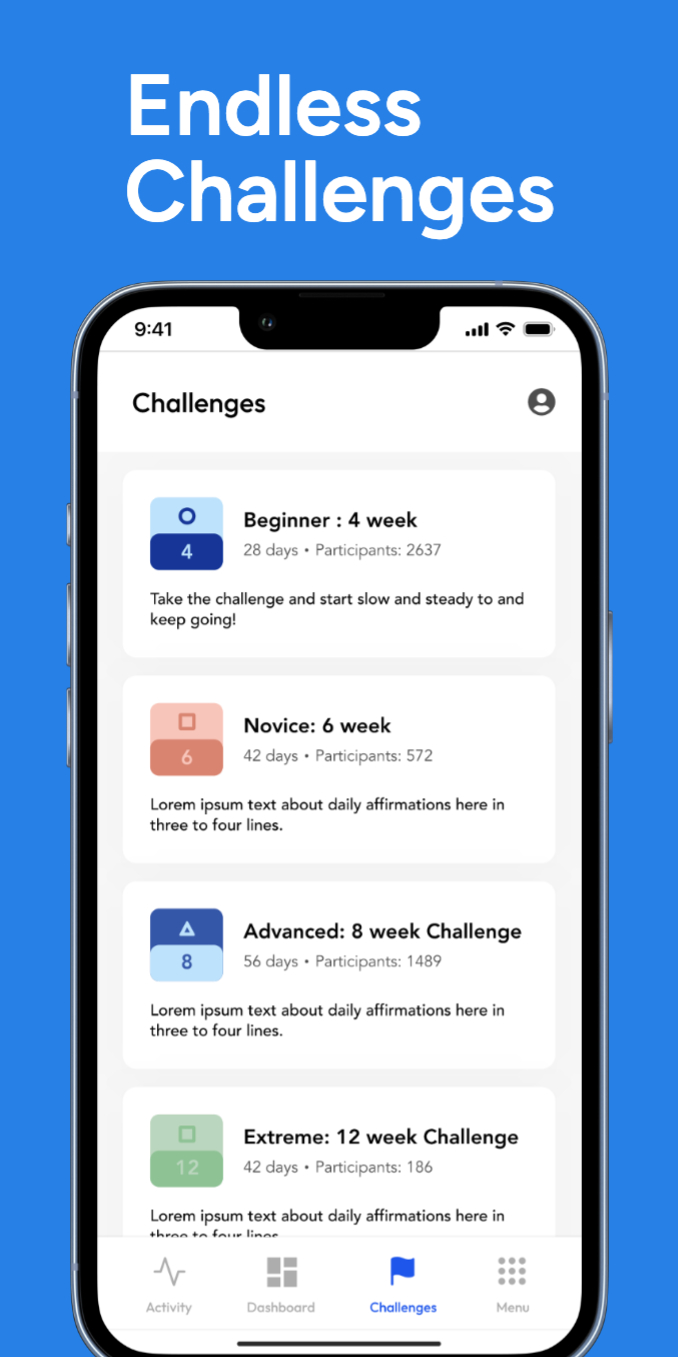
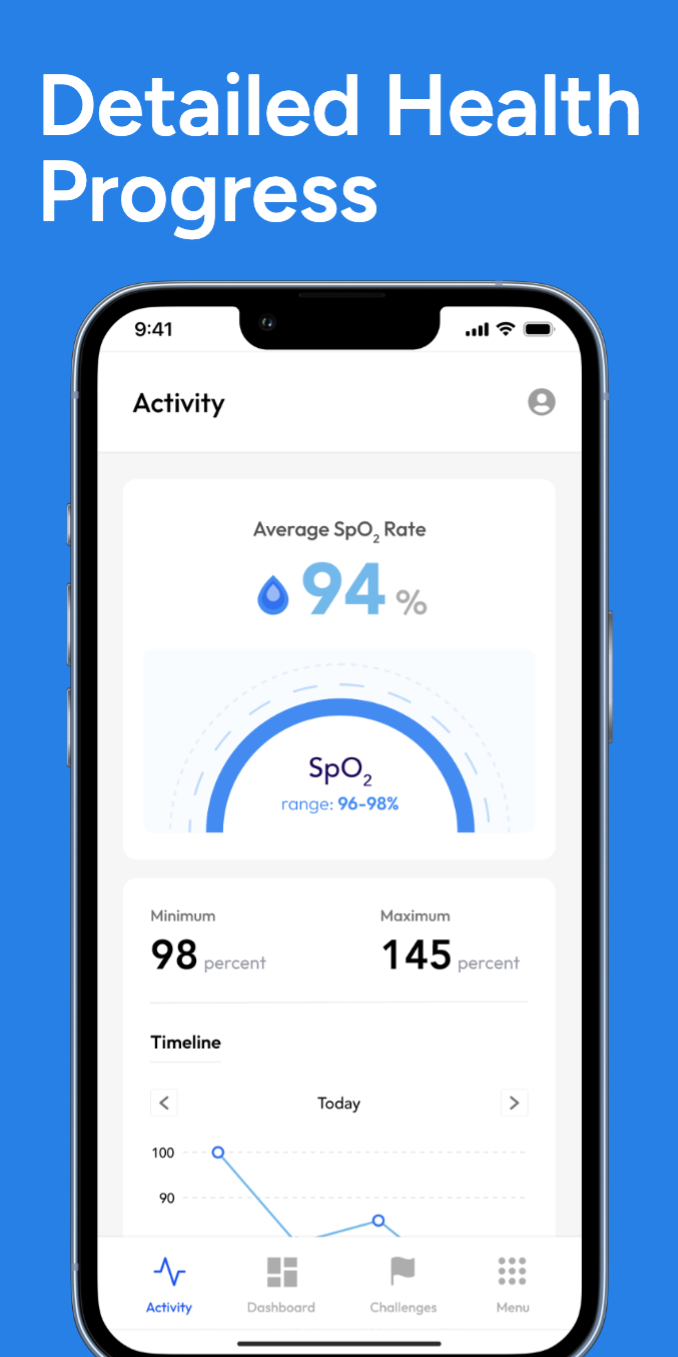
Reflections
Minimalism is Not Minimal Information
Minimalism isn't just about clean design—it's about delivering relevant, actionable insights at the right time. A visually appealing product may attract users initially, but true engagement comes from usability and meaningful connections.
Smart Technology Drives Connection
Using the right technology ensures the product feels accessible and seamless. Solutions that are too futuristic or outdated can overwhelm users, increasing cognitive load and reducing engagement. The right tech enhances the experience, making it intuitive and impactful.